
Why Oral Care Should Be More Than Just Brushing Your Teeth
sanjay
July 29, 2026
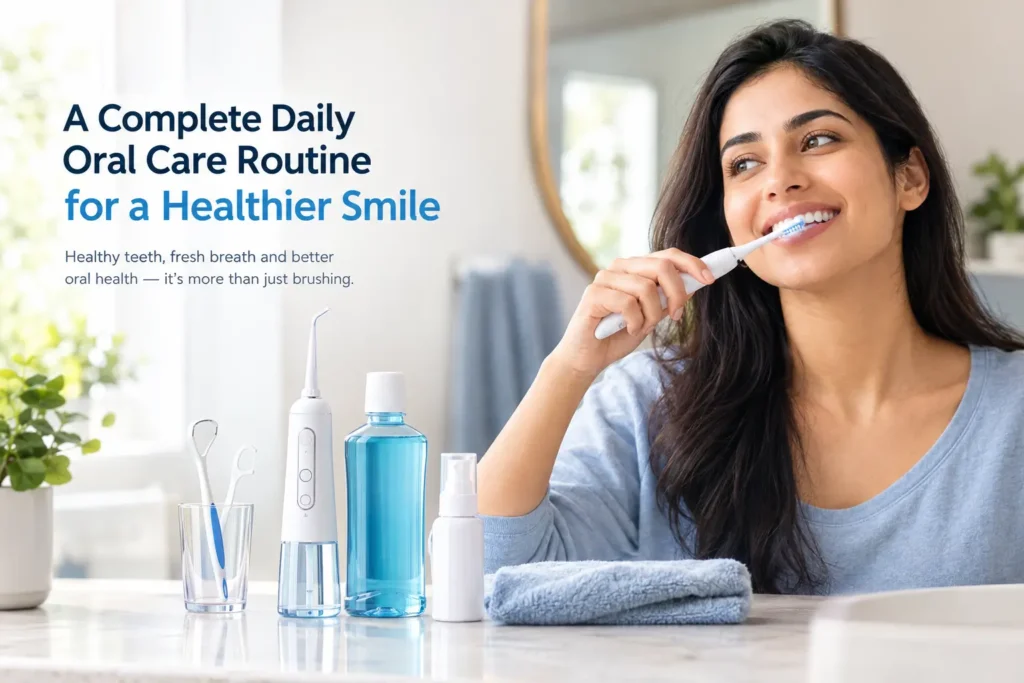
A healthy smile doesn’t happen by accident. It comes from small, consistent habits that you follow every day.
Brushing your teeth is an important part of your oral-care routine, but maintaining good oral hygiene involves more than simply brushing twice a day. Your teeth, gums, tongue, and the spaces between your teeth all need attention.
The good news is that building a complete oral-care routine doesn’t have to be complicated. With the right habits and suitable oral-care products, you can make oral hygiene a simple part of your everyday life.
Let’s look at what a complete daily oral-care routine can look like.
Your morning oral-care routine sets the tone for the rest of the day.
After waking up, begin by brushing your teeth thoroughly. Use a fluoride toothpaste and a suitable toothbrush, and spend around two minutes cleaning your teeth.
Pay attention to all surfaces of your teeth, including the front, back, and chewing surfaces. Don’t rush through the process simply because you’re getting ready for work or school.
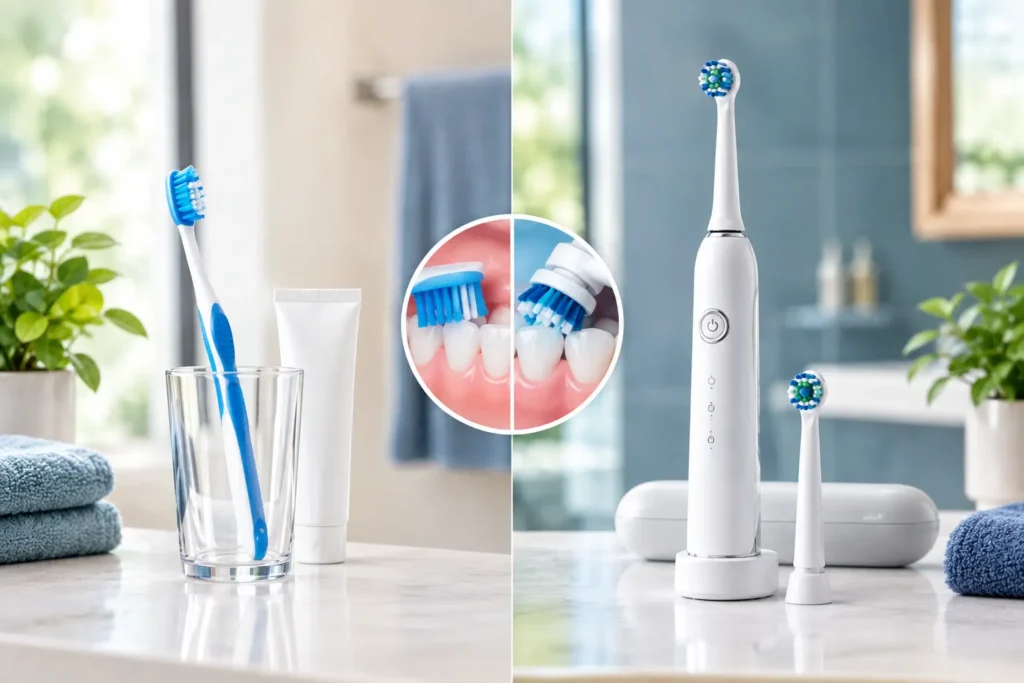
An electric toothbrush can make brushing more convenient and consistent. Many electric toothbrushes are designed to provide guided brushing and may include features such as timers or different brushing modes.
However, the most important factor is using your toothbrush correctly and consistently.
Brushing is the foundation of your oral-care routine.
Brush your teeth twice a day and make sure you reach the gumline without using excessive pressure. Brushing too aggressively doesn’t mean your teeth are getting cleaner; it can irritate your gums and contribute to unnecessary wear.
A good brushing routine should be gentle, thorough, and consistent.
If you’re using an electric toothbrush, allow the brush to do the work instead of pressing it forcefully against your teeth.
Even after brushing, some areas of your mouth remain difficult to reach.
The spaces between your teeth can collect food particles and plaque. These areas need their own cleaning routine.
Traditional dental floss is one option, while interdental brushes and water flossers can provide alternatives depending on your needs and preferences.
A toothbrush primarily cleans the surfaces it can reach. Cleaning between the teeth helps address areas where a regular toothbrush may not reach effectively.
A water flosser uses a stream of water to help clean between teeth and around the gumline. For people who find traditional floss difficult to handle, it can be a convenient addition to their daily routine.
The important thing is to choose a method that works for you and use it consistently.
Your tongue is also part of your mouth’s overall hygiene.
Its surface can collect bacteria and debris, which may contribute to an unpleasant feeling or bad breath.
After brushing, gently clean your tongue using a tongue cleaner or an appropriate toothbrush feature.
It only takes a few extra seconds, but it can make your mouth feel cleaner and fresher.
Mouthwash can be another useful addition to an oral-care routine.
Depending on the formulation, mouthwash may be designed to support different oral-health needs, such as freshening breath or helping with plaque and gingivitis.
However, mouthwash should complement—not replace—brushing and cleaning between your teeth.
Think of it as an additional step rather than the main part of your oral-care routine.
If you have specific dental concerns, choosing a mouthwash based on professional dental advice can be particularly helpful.
Fresh breath isn’t only a morning concern.
After meals, coffee, or long periods without brushing, you may want a quick way to freshen your mouth.
An oral spray can be a convenient option when brushing isn’t immediately possible.
Keep in mind that an oral spray primarily provides convenience and freshness. If you regularly experience persistent bad breath, don’t simply try to mask it. Talk to a dental professional to determine whether there is an underlying cause.
Your evening oral-care routine is just as important as your morning routine.
Throughout the day, your mouth is exposed to food, drinks, and bacteria. Before going to bed, give your teeth and gums the attention they need.
A simple evening routine can include:
Brush → Clean between your teeth → Clean your tongue → Rinse if appropriate
Once you’re finished, avoid unnecessary snacking or sugary drinks before going to sleep.
Making this routine a habit can be much more valuable than occasionally spending extra time on oral care.
One common misconception is that harder brushing means cleaner teeth.
It doesn’t.
Your teeth and gums need thorough cleaning, but excessive pressure can irritate the gums and cause unnecessary wear.
Use gentle movements and allow the toothbrush to clean the surfaces rather than forcing it against your teeth.
If you’re unsure about your brushing technique, a dental professional can show you the appropriate method for your individual needs.
Your toothbrush is a tool that you use every day, so it also needs attention.
Over time, toothbrush bristles can become worn and less effective. If you’re using an electric toothbrush, remember to replace the brush head according to the manufacturer’s recommendations or when the bristles become worn.
Keeping your oral-care tools clean and in good condition is a small but important part of maintaining your routine.
A good home-care routine is important, but it doesn’t replace professional dental care.
Regular dental checkups allow a dental professional to examine your teeth and gums and identify potential problems. Your dentist can also recommend changes to your brushing, interdental cleaning, or other oral-care habits based on your individual needs.
You shouldn’t wait until you have severe tooth pain before seeing a dentist.
If you notice symptoms such as persistent tooth sensitivity, bleeding gums, swelling, tooth pain, or ongoing bad breath, consider seeking professional dental advice.
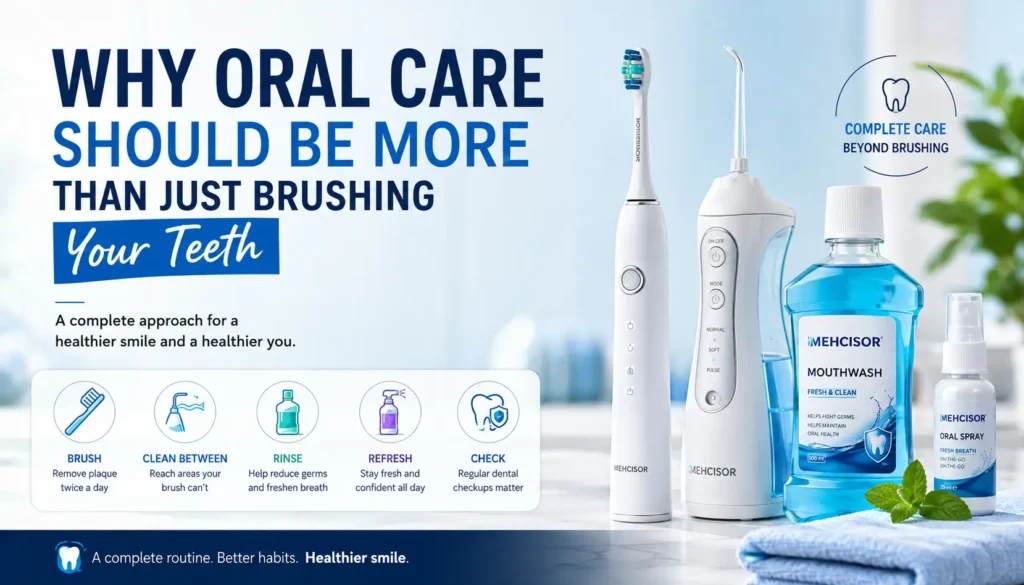
If you want to keep things simple, remember these five steps:
1. Brush
Clean your teeth thoroughly for about two minutes.
2. Clean
Clean your tongue and, when appropriate, clean between your teeth.
3. Rinse
Use an appropriate mouthwash if it is part of your routine.
4. Refresh
Maintain good hydration and use an oral spray when you need convenient freshness.
5. Repeat & Protect
Brush again, clean between your teeth, and complete any additional steps recommended by your dental professional.
And don’t forget your regular dental checkups.
There is no single oral-care routine that is perfect for everyone.
Children may have different needs from adults. Someone with braces may require additional cleaning. People with sensitive teeth, gum problems, dental implants, crowns, or other dental conditions may also need specific recommendations.
That’s why your oral-care routine should be adapted to your individual needs.
The goal isn’t to use as many products as possible.
The goal is to use the right habits and tools consistently.
At Mehcisor, we believe taking care of your oral health should be simple, consistent, and convenient.
Our range of oral-care solutions—including electric toothbrushes, water flossers, mouthwash, and oral sprays—is designed to support different parts of your everyday routine.
But oral care doesn’t stop at products.
Mehcisor also offers dental consultation and checkup services, helping you combine everyday oral hygiene with professional dental guidance.
Because your oral-care routine isn’t about doing one thing perfectly.
It’s about doing the right things consistently.
A healthier smile starts with everyday choices.
Brush your teeth regularly. Clean between them. Take care of your tongue. Keep your mouth fresh. Pay attention to changes in your oral health. And visit a dental professional regularly.
You don’t need a complicated routine.
You need a consistent one.
Brush. Clean. Rinse. Refresh. Check.
Make oral care a daily habit—and give your smile the attention it deserves.