
Why Oral Care Should Be More Than Just Brushing Your Teeth
sanjay
July 29, 2026
Brushing your teeth is probably the first thing that comes to mind when you think about oral care.
And for good reason.
Brushing twice a day with fluoride toothpaste is one of the most important habits for maintaining healthy teeth and gums. But is brushing alone enough?
Not quite.
Your mouth is more than just your teeth. It includes your gums, tongue, the spaces between your teeth, and other tissues that all play an important role in your oral health. A toothbrush does an excellent job of cleaning many tooth surfaces, but it cannot reach every area of your mouth.
That is why a complete oral care routine should go beyond brushing.
From cleaning between your teeth to maintaining fresh breath and visiting a dental professional regularly, taking care of your mouth requires a more complete approach.
When we talk about oral health, it is easy to focus only on cavities or keeping our teeth white.
However, oral health also includes the health of your gums and the overall condition of your mouth. Plaque can accumulate around the gumline and between teeth, while food particles can remain in areas that a toothbrush cannot effectively reach.
If plaque is not removed regularly, it can contribute to gum problems and tooth decay.
The good news is that many common oral health problems can be prevented or managed with consistent daily care and professional dental care when needed.
So instead of asking, “Did I brush my teeth today?”, it is better to think:
“Did I take care of my entire mouth today?”
A good oral care routine starts with brushing.
The American Dental Association recommends brushing twice a day with fluoride toothpaste for approximately two minutes. Brushing helps remove plaque, food particles and bacteria from the surfaces of your teeth.
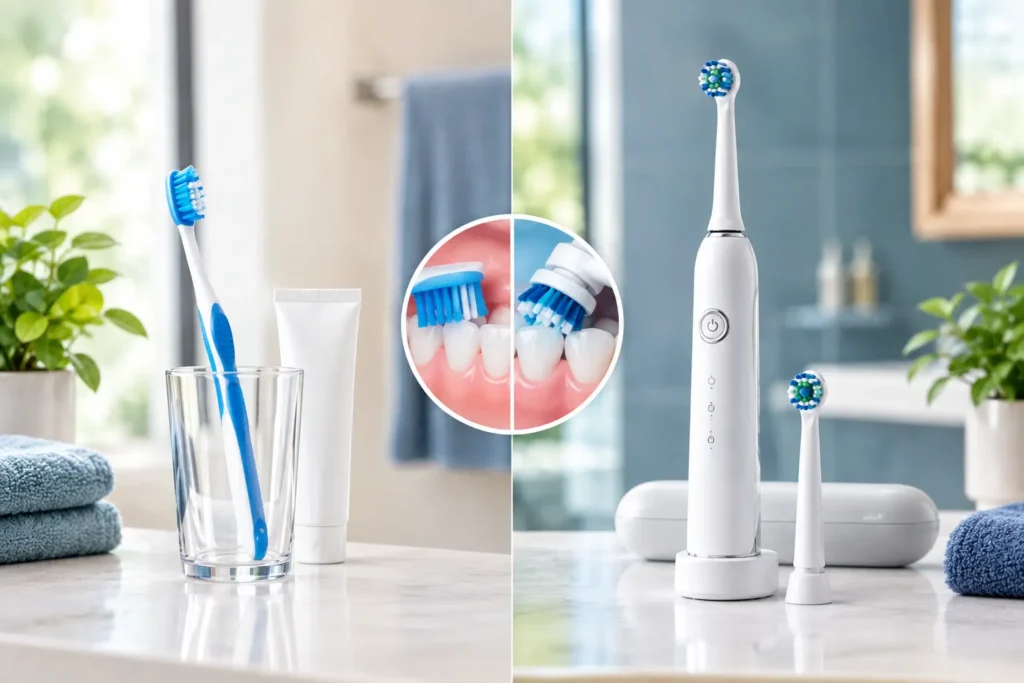
For many people, an electric toothbrush can make maintaining a consistent brushing routine easier. Many powered toothbrushes include features such as built-in timers and different brushing modes.
Both manual and powered toothbrushes can be effective when used properly. The important thing is developing a routine that allows you to clean your teeth thoroughly and consistently.
But even the best toothbrush has limitations.
And that brings us to an often-overlooked part of oral care.
Look closely at your teeth.
Your toothbrush can reach the front, back and chewing surfaces of your teeth, but what about the narrow spaces between them?
These areas can collect food debris and plaque, and toothbrush bristles alone cannot clean them effectively. This is why daily interdental cleaning is an important part of maintaining healthy teeth and gums.
Traditional dental floss is one option.
Interdental brushes and water flossers are other options that can help clean between teeth.
A water flosser uses a controlled stream of water to help clean between teeth and around the gumline.
For people who find traditional floss difficult or uncomfortable to use, a water flosser can be a convenient alternative for interdental cleaning.
The key is consistency.
The best oral care tool is ultimately one that you can use correctly and regularly as part of your routine.
Have you ever brushed your teeth and still felt that your mouth wasn’t completely fresh?
There can be several reasons for this.
Food particles, bacteria and plaque can remain in areas that brushing alone doesn’t adequately reach. The tongue can also collect bacteria and debris.
This is where additional oral-care products may have a role.
Mouthwash, for example, can be a useful addition to an oral hygiene routine for some people. Depending on its ingredients and purpose, mouthwash may help with issues such as bad breath, plaque, gingivitis or tooth decay.
However, it is important to remember one thing:
Mouthwash is not a replacement for brushing and interdental cleaning.
Similarly, an oral spray can be useful when you want a quick feeling of freshness during the day, particularly when brushing isn’t immediately convenient.
Think of these products as additions to your routine—not replacements for the basics.
Your teeth aren’t the only part of your mouth that needs cleaning.
The surface of your tongue can collect bacteria and debris. Including gentle tongue cleaning as part of your daily routine can help you maintain a cleaner-feeling mouth.
It doesn’t need to be complicated.
After brushing your teeth, gently clean your tongue according to the instructions for your chosen oral-care tool.
A few extra seconds can make your overall routine feel much more complete.
Bad breath can be embarrassing, but reaching for a mint or oral spray only addresses the immediate experience.
Persistent bad breath can sometimes be associated with oral hygiene issues, dry mouth, gum disease or other underlying conditions.
That is why maintaining good oral hygiene is more useful than simply masking unpleasant breath.
Regular brushing, cleaning between the teeth, cleaning the tongue and maintaining appropriate dental care can all contribute to better oral hygiene.
An oral spray can then provide an additional freshness boost when you need it.
Even if you brush and clean between your teeth every day, professional dental care still matters.
Some oral health problems may not cause noticeable symptoms in their early stages. Regular dental examinations can help identify potential problems before they become more serious. The CDC recommends at least yearly dental checkups, while the appropriate frequency can vary depending on an individual’s oral health and their dentist’s recommendations.
A dental visit isn’t only about treating a toothache.
It can also be an opportunity to discuss:
Your brushing technique
Gum health
Plaque and tartar
Tooth sensitivity
Bad breath
Cleaning between your teeth
Your individual oral-care routine
Any concerns you may have about your teeth or gums
In other words, professional dental care and daily home care complement each other.
Good oral care doesn’t need to be complicated.
A simple routine can include:
Morning
Brush → Clean your tongue → Rinse if appropriate
During the day
Stay hydrated → Maintain mindful eating habits → Use an oral spray when appropriate for freshness
Evening
Brush → Clean between your teeth → Follow any additional routine recommended by your dentist
And, of course, schedule regular dental checkups.
The exact routine can differ from person to person. Someone with braces, dental implants, sensitive teeth, gum problems or other specific dental needs may require additional or different care.
That’s why personalized dental guidance can be valuable.
There is no single product that can take care of everything.
A toothbrush has an important job.
A water flosser has a different job.
Mouthwash serves a different purpose.
An oral spray can provide convenient freshness.
And a dental professional provides something none of these products can replace: professional assessment and personalized advice.
The goal isn’t to collect more oral-care products.
The goal is to create a routine where each tool serves a useful purpose.
At Mehcisor, we believe oral care should fit naturally into everyday life.
That’s why our approach goes beyond a single oral-care product.
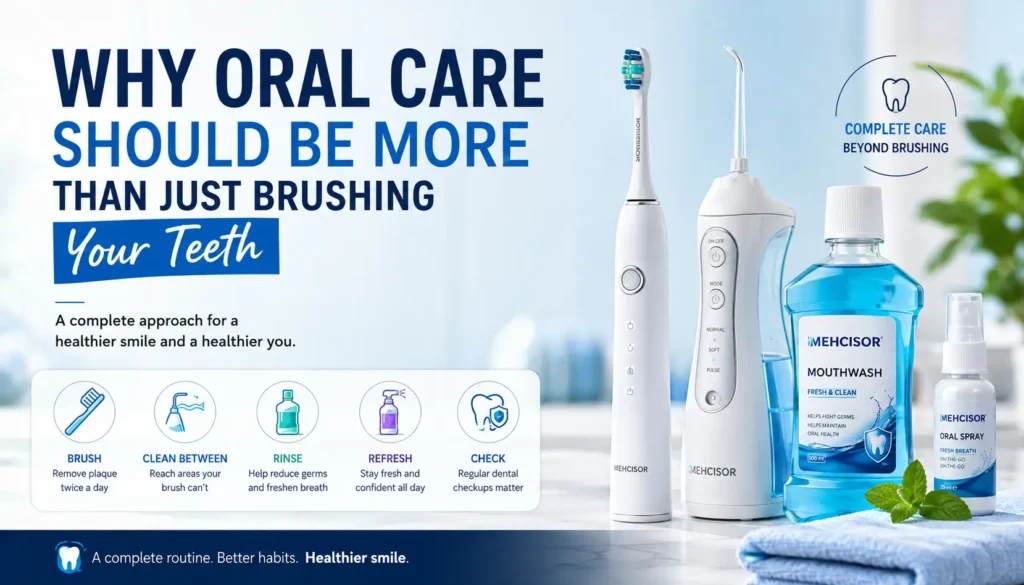
From electric toothbrushes and water flossers to mouthwash and oral sprays, Mehcisor brings together products designed to support different parts of your everyday oral-care routine.
And because good oral health isn’t only about what you do at home, Mehcisor also offers dental consultation and checkup services, helping you take a more complete approach to your oral health.
Because a healthy smile isn’t created by brushing alone.
Brush. Clean. Rinse. Refresh. Check.
Make oral care a complete daily habit.
Your teeth may be what you see when you smile, but your oral health is about much more than what is visible.
Brushing twice a day is an excellent place to start. But when you combine effective brushing with interdental cleaning, appropriate oral-care products, healthy habits and regular professional dental care, you create a much more complete approach to looking after your mouth.
Because taking care of your smile should mean taking care of your whole mouth.