
Why Oral Care Should Be More Than Just Brushing Your Teeth
sanjay
July 29, 2026
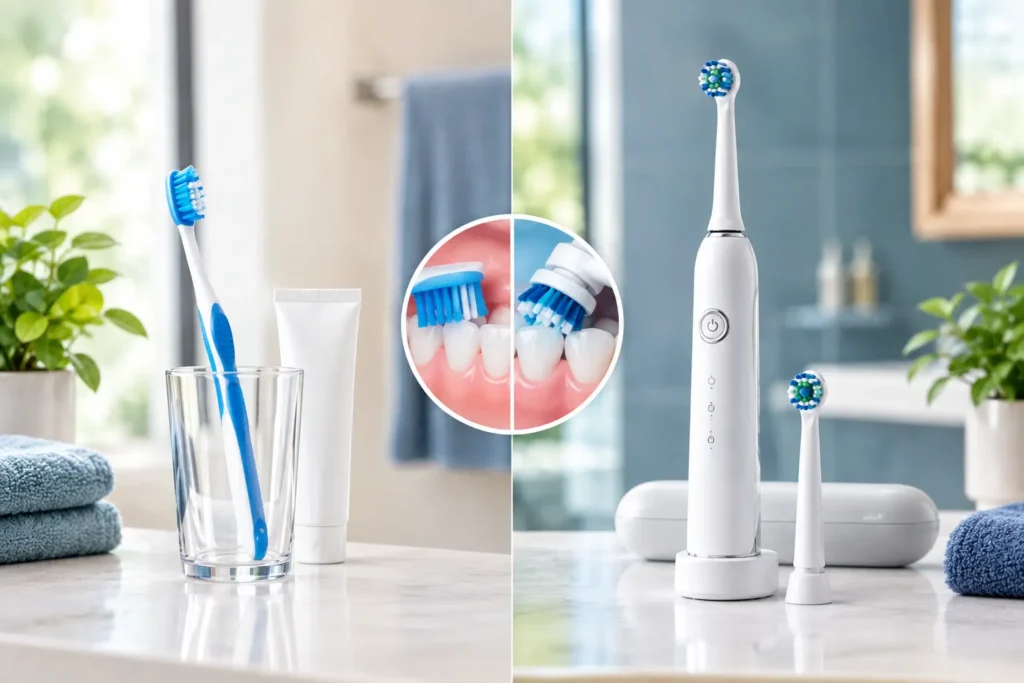
For generations, brushing your teeth with a manual toothbrush has been a simple part of everyday life. Today, electric toothbrushes have become increasingly popular, offering features designed to make brushing easier and more consistent.
But does an electric toothbrush actually make a difference?
The answer isn’t simply about choosing between “electric” and “manual.” Both can be effective when used correctly. What matters most is your brushing technique, consistency, and ability to clean your teeth thoroughly.
So, how do the two compare, and which one might be right for you?
An electric toothbrush uses a motor to move the brush head automatically. Depending on the model, the brush head may use oscillating, rotating, or sonic movements to clean the teeth.
Many modern electric toothbrushes also include features such as:
Built-in brushing timers
Multiple brushing modes
Different intensity settings
Replaceable brush heads
Pressure guidance
Rechargeable batteries
These features are designed to make everyday brushing more convenient and help users develop a consistent brushing routine.
A manual toothbrush is the traditional toothbrush that relies entirely on your hand movements.
It doesn’t require charging or batteries, making it simple to carry and use anywhere.
A manual toothbrush can be highly effective when you use the correct technique, brush for an appropriate amount of time, and reach all areas of your mouth.
The biggest difference is that with a manual toothbrush, you control every movement.
Let’s look at some of the important differences between the two.
With a manual toothbrush, you need to control the movement, angle, pressure, and coverage yourself.
An electric toothbrush does much of the movement for you.
This can be particularly helpful for people who struggle to maintain consistent brushing technique or find manual brushing difficult.
However, an electric toothbrush doesn’t mean you can simply hold it against your teeth without paying attention. You still need to guide the brush across the different surfaces of your teeth.
One of the easiest things to overlook when brushing is time.
Many people believe they have brushed for two minutes when they have actually spent much less time cleaning their teeth.
Electric toothbrushes often include built-in timers that can help you keep track of your brushing time.
This can make it easier to establish a consistent routine.
More pressure does not necessarily mean better cleaning.
Brushing too aggressively can irritate your gums and contribute to tooth wear.
Some electric toothbrushes include pressure-sensing features that can alert you when you’re applying excessive pressure.
If you tend to brush aggressively, this feature can be useful for developing gentler brushing habits.
A manual toothbrush is extremely straightforward.
Pick it up, add toothpaste, brush, rinse, and you’re done.
An electric toothbrush requires charging or batteries, and its brush head needs to be replaced periodically.
However, many people find the additional features of an electric toothbrush worth the small amount of maintenance involved.
This is one of the most common questions.
The answer depends on what you mean by “better.”
Research has found that powered toothbrushes can provide benefits for plaque control and gum health compared with manual toothbrushes, although both types can be used effectively. The technique and consistency of the person using the toothbrush remain important.
An electric toothbrush should therefore not be viewed as a replacement for good brushing habits.
Instead, it can be a tool that helps make those habits easier to maintain.
An electric toothbrush can be especially convenient for people who:
Have difficulty maintaining consistent brushing technique
Tend to brush too quickly
Apply too much pressure
Want a built-in brushing timer
Find manual brushing tiring or uncomfortable
Want additional brushing modes or settings
Prefer a guided brushing experience
People with certain dental conditions, braces, limited mobility, or other specific needs may also benefit from powered brushing, but the right choice can depend on individual circumstances.
If you’re unsure, ask your dentist which type of toothbrush is appropriate for you.
Buying an electric toothbrush is only the first step.
You still need to use it correctly.
Let the brush do the work.
Apply gentle pressure and move the brush systematically across your teeth.
Don’t focus only on the front teeth.
Remember the:
Outer surfaces
Inner surfaces
Chewing surfaces
Gumline
A systematic approach can help ensure that you don’t repeatedly miss the same areas.
Give yourself enough time to clean your teeth properly.
A timer can be useful because it removes the guesswork from your brushing routine.
After brushing, rinse the brush head thoroughly and allow it to dry appropriately.
Replace the brush head according to the manufacturer’s recommendations or when the bristles become visibly worn.
An electric toothbrush can make brushing easier, but it isn’t a complete oral-care solution.
There are areas that brushing alone may not clean effectively—particularly the spaces between your teeth.
That’s why interdental cleaning remains an important part of an overall oral-care routine.
Depending on your needs, you might use:
Dental floss
Interdental brushes
A water flosser
Similarly, mouthwash and oral sprays can serve additional purposes but shouldn’t be considered replacements for brushing or cleaning between your teeth.
When choosing an electric toothbrush, it can be tempting to focus on the number of modes, buttons, or smart features.
But the most sophisticated toothbrush isn’t necessarily the best toothbrush for you.
Consider whether it is:
Comfortable: You should be able to hold and use it easily.
Simple: You should understand how to operate it without unnecessary complexity.
Suitable: The brush head and settings should suit your oral-care needs.
Practical: Charging, replacement heads, and everyday maintenance should fit your lifestyle.
Consistent: Most importantly, you should actually enjoy using it regularly.
A toothbrush that becomes part of your daily routine is more valuable than one with features you never use.
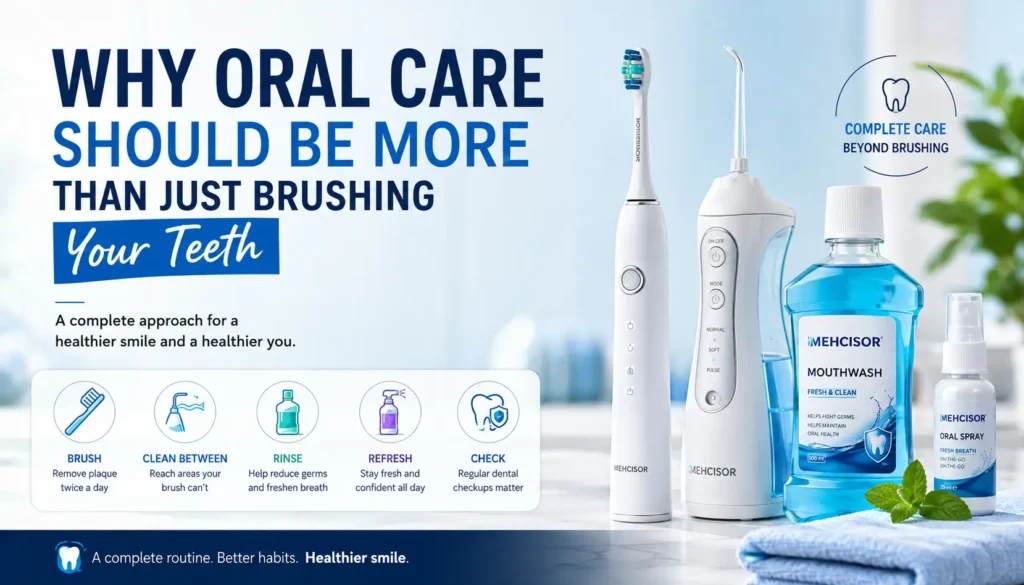
Good oral care doesn’t stop at brushing.
Think of your daily routine as a combination of different habits:
Brush to clean your teeth.
Clean between your teeth to reach areas a toothbrush may miss.
Clean your tongue as part of your overall mouth hygiene.
Rinse when appropriate as an additional step in your routine.
Refresh when you need convenient freshness during the day.
Visit your dentist for professional assessment and advice.
Each step has a different purpose.
Together, they create a more complete approach to oral care.
If you are comfortable with a manual toothbrush and maintain good brushing habits, there’s no reason to feel that you must switch to an electric toothbrush.
On the other hand, if you want help with brushing time, consistency, pressure, or simply prefer the experience of powered brushing, an electric toothbrush may be worth considering.
The best choice is ultimately the one that helps you maintain good oral hygiene consistently.
At Mehcisor, we believe that oral-care products should support real everyday habits.
Our electric toothbrushes are designed to be part of a practical oral-care routine, alongside other solutions such as water flossers, mouthwash, and oral sprays.
And because everyone’s oral-health needs can be different, Mehcisor also provides dental consultation and checkup services to help people make more informed decisions about their oral care.
Whether you prefer a manual toothbrush or an electric one, the goal remains the same:
Clean consistently. Care properly. Keep your smile healthy.
An electric toothbrush isn’t a magic solution for perfect oral health, and a manual toothbrush isn’t an outdated option.
Both can be useful.
The difference often comes down to how consistently and correctly you use them.
If an electric toothbrush helps you brush for the recommended amount of time, use appropriate pressure, and maintain a regular routine, it can be a valuable addition to your oral-care habits.
But remember that brushing is only one part of the bigger picture.
A healthier smile starts with consistent daily care—and continues with the right habits, the right tools, and regular professional dental care.